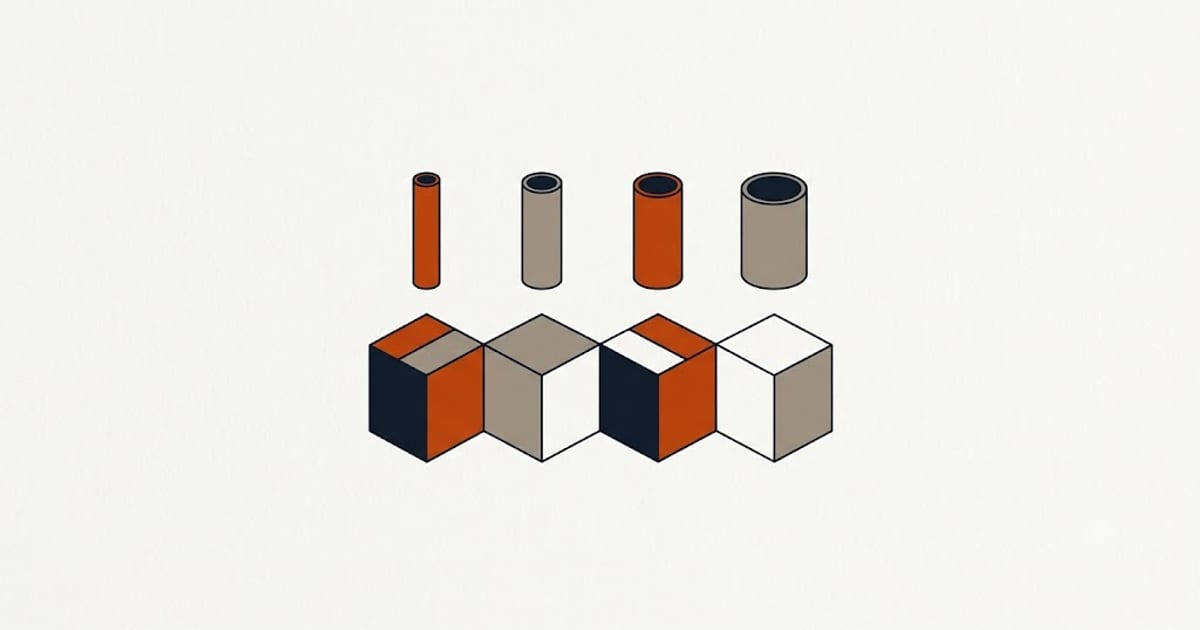
A gas water heater burns fuel and has to get the products of combustion out of the building, and get combustion air in.
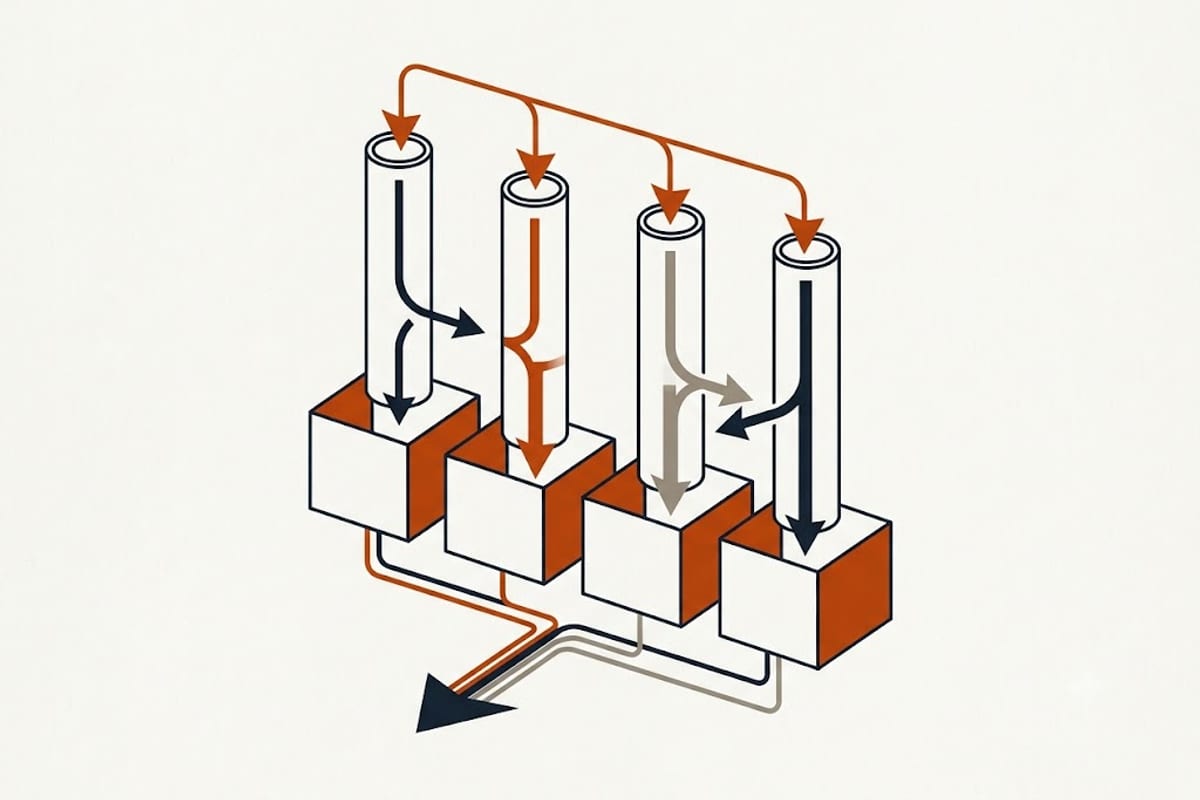
Atmospheric
The traditional arrangement. A draft hood on top of the heater, a metal flue rising to a chimney, and the exhaust carried up by its own buoyancy.
Simple, cheap, and no electricity required — which means it keeps working during a power outage.
It depends on the chimney drafting properly, and on the room having enough combustion air.
Power-vent
A fan on the heater pushes the exhaust through a plastic vent, usually out a sidewall.
Used when there is no usable chimney, or where the chimney has been orphaned by a furnace replacement.
Combustion air still comes from the room, and the unit needs an electrical supply.
Direct-vent
Two pipes: one bringing combustion air from outdoors and one taking exhaust out, in a sealed system.
The best arrangement for a tight house or a small closet, because it does not depend on the room for air and is not affected by exhaust fans elsewhere in the building.
Condensing
Extracts so much heat that the exhaust condenses, allowing plastic venting and giving a substantially higher efficiency.
Produces acidic condensate needing a drain, and is used mainly on tankless units and on higher-efficiency storage heaters.
Combustion air
An atmospheric or power-vent heater draws its combustion air from the room, and the room has to be able to supply it.
Codes specify a minimum volume per BTU of input, and where the space is smaller — a mechanical closet, a tight basement — openings to an adjacent space or to outdoors are required, sized by the rules.
A heater in a sealed closet starves, burns poorly, and produces carbon monoxide. This is the reason direct-vent units exist and the reason a heater must never simply be closed into a cupboard.
Backdrafting
An atmospherically vented appliance drafts by buoyancy, and it competes with everything in the house that moves air out: kitchen exhaust, bathroom fans, a clothes dryer, a fireplace.
In a tight house with a powerful range hood, the water heater can be pulled into backdrafting — exhaust spilling into the room instead of rising.
The test is done with the house depressurised at worst case, and it is standard practice after any air sealing work. Where a house has been tightened, the water heater is one of the appliances to check.
The orphaned flue
When a gas furnace sharing a chimney is replaced with a condensing model venting in plastic, the water heater is left alone on a flue sized for both.
The flue is now oversized and cold. Draft suffers, exhaust condenses inside the masonry, and backdrafting becomes possible.
The remedies: reline the chimney to a smaller diameter, convert the water heater to power-vent or direct-vent, or replace it with electric.
Any of them is a real cost and it belongs on the furnace quote. It is the single most common venting problem created in existing houses.
Carbon monoxide alarms
Any house with a combustion appliance should have them, on every level and near sleeping areas.
They are inexpensive, and they are the layer that does not depend on the venting having been thought through correctly by whoever last worked on the house.
Vent material and sizing
Atmospheric heaters use single-wall or B-vent metal, sized by the appliance input and the vent height, with rules on slope, support and clearance to combustibles.
Power-vent and condensing units use the plastic the manufacturer specifies, with a stated maximum equivalent length that every elbow counts against.
Substituting a material or exceeding the length is outside the appliance's listing, and both are inspection findings.
Termination clearances
A sidewall termination has required distances from windows, doors, air inlets, gas meters, walkways and the property line, plus a height above expected snow.
The snow one is the most common winter failure on power-vented appliances: a buried termination trips the pressure switch and the heater locks out, exactly when hot water is most wanted.