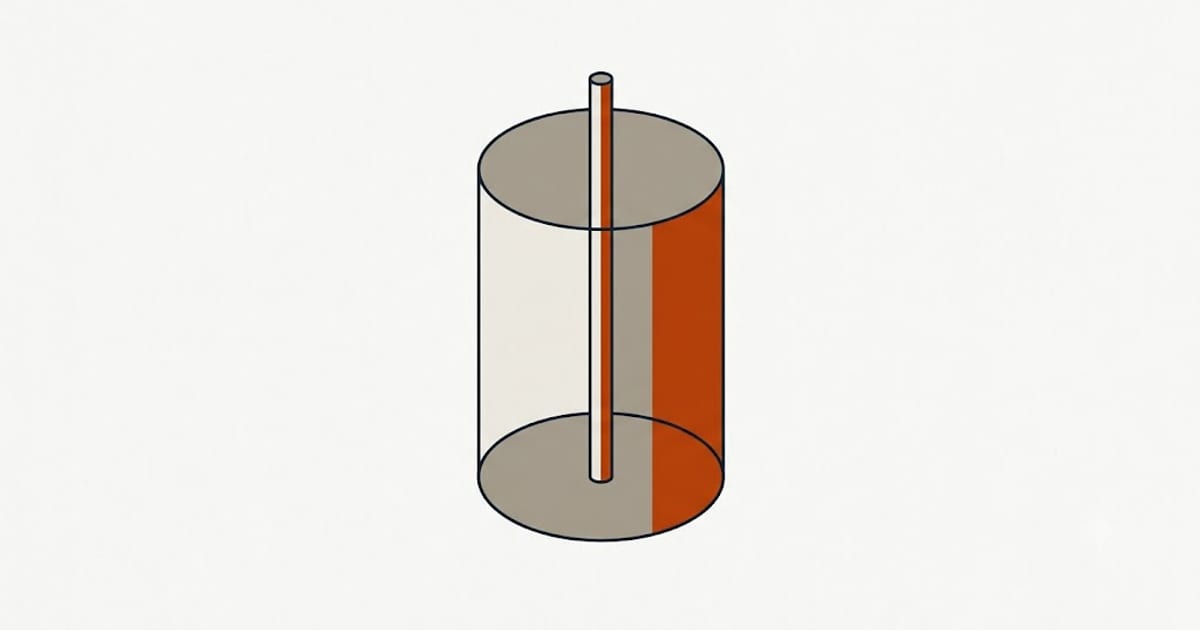
A storage water heater is a steel tank with a glass lining, and the lining is never perfect. Where water reaches steel, it corrodes.
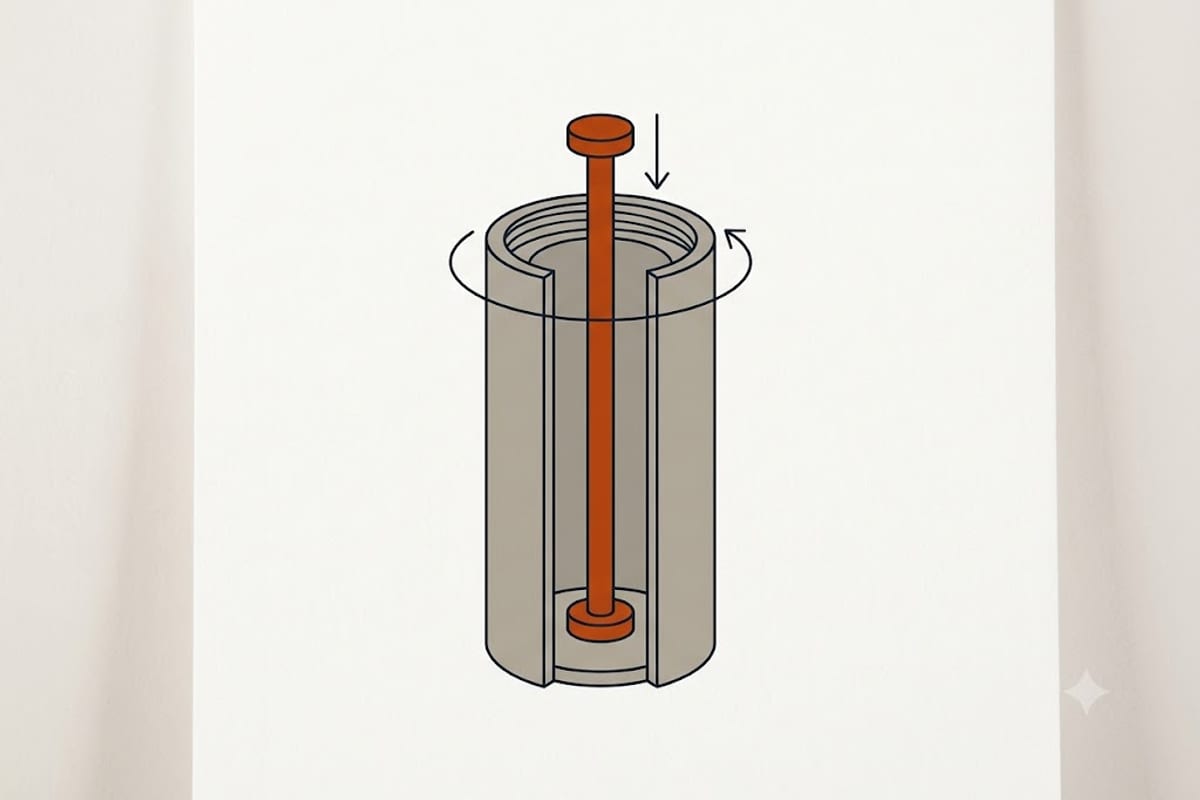
How the anode works
A rod of magnesium or aluminium hangs inside the tank, connected to the steel.
Those metals are more electrochemically active than steel, so they corrode preferentially — the rod is consumed and the tank is protected. That is what "sacrificial" means.
When the rod is used up, the protection ends and the tank begins to rust from the inside. Some time after that it leaks, and a leaking tank is the end of the water heater.
The interval
Inspect every two to three years, sooner in aggressive water.
Replace when it is substantially consumed — the common guidance is when the steel core wire is exposed over much of its length, or the rod is reduced to less than about half its diameter.
Water chemistry determines the rate. Softened water is notably harder on anodes than hard water, which is a genuine trade-off of installing a softener.
The types
Magnesium — most protective, and it is what most tanks ship with. In water with certain sulphate-reducing bacteria it can produce a rotten-egg smell.
Aluminium — less reactive, longer lasting, and it is the usual substitute where the smell is a problem. Slightly less protective.
Zinc-alloy — an aluminium rod with a small zinc content, specifically used to address the sulphur smell.
Powered anode — an electrically powered titanium rod that is not consumed. More expensive, and it lasts the life of the tank and eliminates the smell problem entirely.
The smell
Hot water smelling of rotten eggs is usually the anode reacting with bacteria in the water, producing hydrogen sulphide.
The fixes, in order: switch to an aluminium-zinc rod, disinfect the tank, or fit a powered anode. Removing the anode entirely stops the smell and ends the tank's protection, which is a trade nobody should make.
Replacing it
It is a hex head on the top of the tank, sometimes under the insulation or the top pan, sometimes combined with the hot outlet fitting.
It is often extremely tight, having been torqued at the factory and then heated and cooled for years. A breaker bar and an impact wrench are the usual tools, and there needs to be headroom above the tank to withdraw the rod — where there is not, segmented flexible rods exist.
Turn off the power or gas, close the cold inlet, and relieve the pressure first.
Why it is skipped
Because the water heater works fine, right up until it does not.
Anode replacement is the clearest example in a house of maintenance that has no visible effect and doubles the life of an appliance. A tank whose anode has been maintained can substantially outlive its warranty; one whose anode was consumed in year five fails early.
The other half of tank life
Sediment collects on the bottom, insulating a gas burner from the water and coating electric elements.
Flushing a few gallons from the drain valve annually removes some of it. A full flush removes more.
Sediment also causes the rumbling and popping sounds an ageing gas heater makes — steam bubbles forming under the deposit — and that noise is a reliable indicator that a flush is overdue.
When the tank has already gone
A leaking tank is not repairable. Any water appearing from the body of the tank rather than from a fitting or the relief valve means replacement.
At that point the anode question becomes: on the new heater, put it in the calendar for year three.