A tankless water heater has no stored volume. Its capacity is a flow rate, and that flow rate depends entirely on how much it has to heat the water.
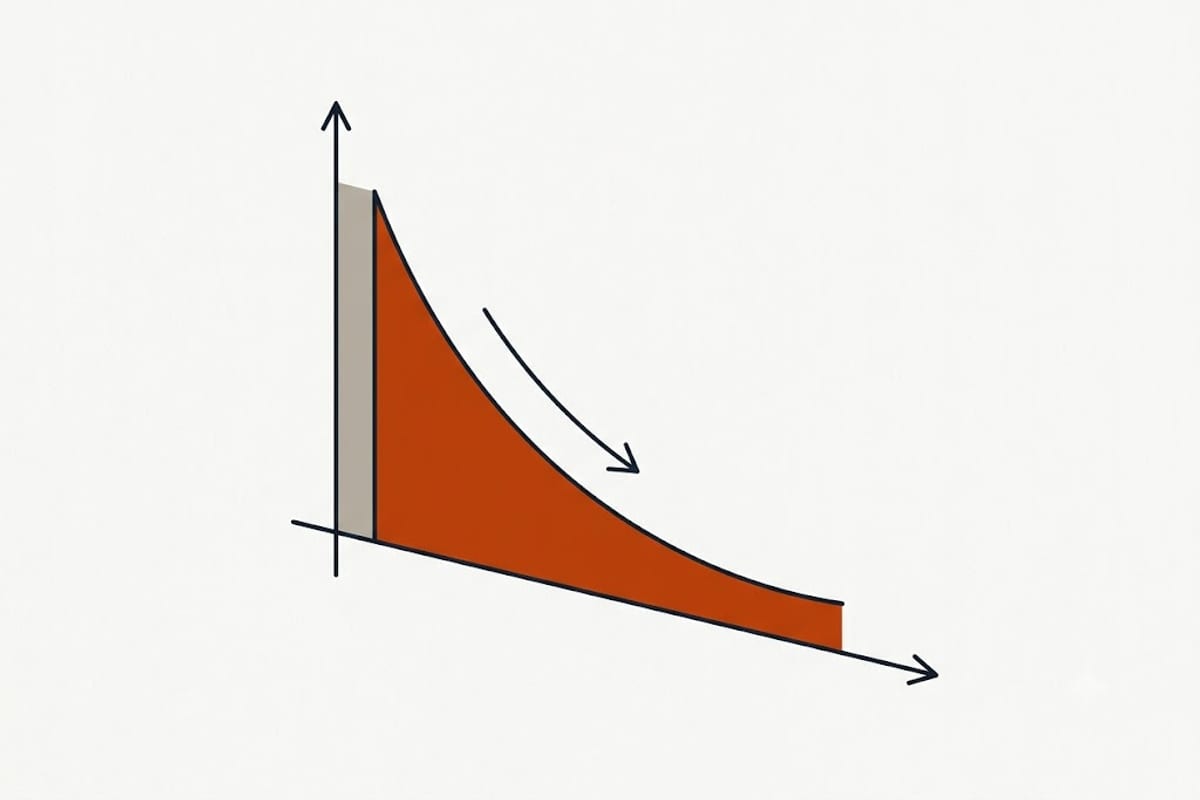
The relationship
BTU/h needed = GPM × 500 × temperature rise (°F)
Rearranged: for a given burner output, the flow a heater delivers is inversely proportional to the temperature rise.
Temperature rise is local
Incoming water temperature varies by region and by season — roughly 70°F in the far South in summer, and as low as 35 to 40°F in the northern tier in winter.
Output temperature is typically 120°F.
So the rise is roughly 50°F in a warm climate and 80°F or more in a cold one, in winter.
A unit rated 9.8 GPM at a 35°F rise may deliver around 4 GPM at 80°F. Those are two very different heaters as far as the household is concerned, and it is the same box.
Working out the demand
Add up the fixtures that will run simultaneously, at their actual flow rates:
| Fixture | Approx. GPM |
|---|---|
| Shower | 1.5–2.5 |
| Bath tap | 4 |
| Kitchen sink | 1.5–2.2 |
| Basin | 1.0–1.5 |
| Dishwasher | 1–2 |
| Clothes washer | 2–3 |
Two showers at once is roughly 4 GPM. Two showers and a kitchen sink is closer to 6.
Then find a unit whose output at your winter temperature rise meets that.
Whole-house gas units
Residential whole-house gas tankless heaters run to roughly 199,000 BTU/h, which is where the sizing tops out.
At a 70°F rise that is around 5 GPM; at a 45°F rise, around 8. In a cold climate a large household may need two units in parallel, which is a normal arrangement and doubles the cost.
Electric tankless
Electric whole-house tankless heaters need an enormous electrical service — commonly 100 to 150 amps of dedicated capacity at 240 V.
Most existing houses cannot supply that without a service upgrade, and that upgrade usually costs more than the heater. They are practical mainly in warm climates, in new construction, or as small point-of-use units.
The other constraints
Minimum flow rate. A tankless unit needs a certain flow to fire, commonly around half a gallon per minute. Below that it does not light, which is why a trickle from a tap runs cold.
The cold water sandwich. Turning a tap off and on again quickly delivers a slug of cooled water sitting in the pipe before the burner catches up. Buffer tanks and recirculation reduce it.
Gas supply. A 199,000 BTU/h appliance is a very large gas load, frequently requiring a larger gas line and sometimes a meter upgrade.
Venting. Condensing tankless units vent in plastic and produce condensate needing a drain.
Where tankless makes sense
Endless hot water for households whose complaint is running out.
Space saving, since the unit hangs on a wall.
Low standby loss, which is the efficiency argument — no tank sitting hot all day.
A long service life relative to a tank, with serviceable parts.
Where a tank is the better answer
Cold incoming water and high simultaneous demand, where the arithmetic above forces two units.
Where the gas line and meter cannot supply it without a utility upgrade.
Where the household's peak is short, which is exactly what a tank's stored volume handles well.
Recirculation
A tankless heater fires only when a tap opens, so the water already sitting in the pipes has to be flushed before hot arrives.
Recirculation solves that and complicates the arrangement: a dedicated return line, or a crossover valve at the furthest fixture, plus a pump and a control.
Some tankless units include a small buffer tank and an internal pump for exactly this. Where instant hot water at the tap matters, that feature is worth choosing at purchase rather than adding afterwards.
Descaling
A tankless heat exchanger scales in hard water, and scale reduces both the flow and the efficiency.
Manufacturers specify a descaling interval — commonly annual in hard water — and service valves make the job straightforward. Installing without those valves makes an annual maintenance task into a plumbing job, and it is a cheap thing to include at installation.