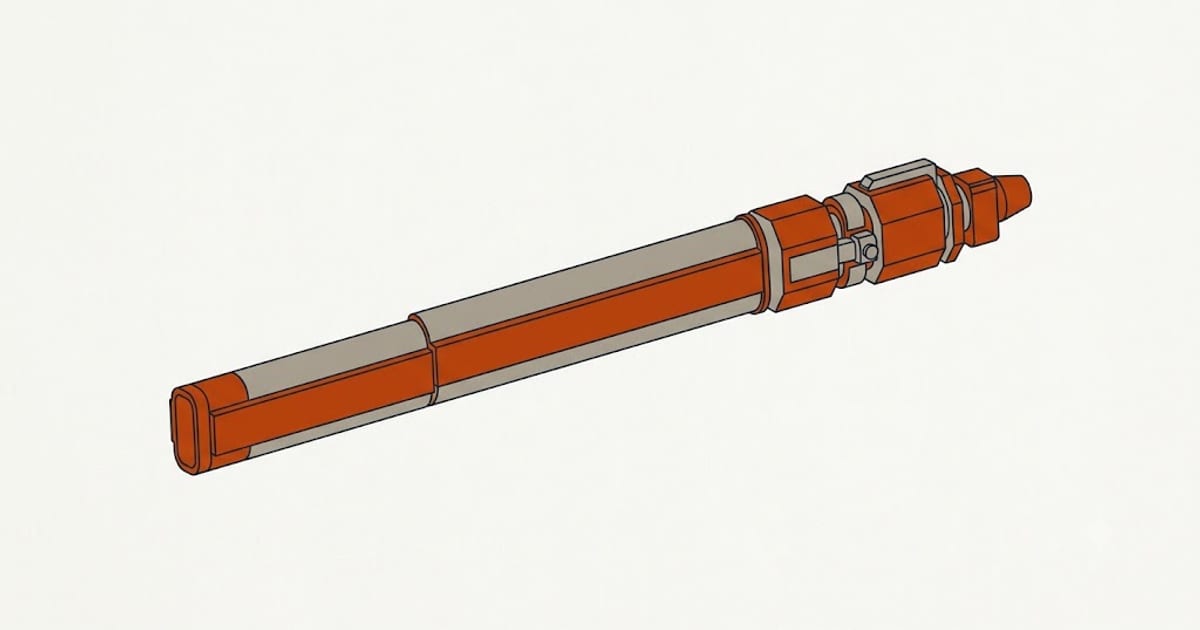
The wait for hot water at a distant tap is the volume of the pipe between it and the heater, divided by the flow rate.
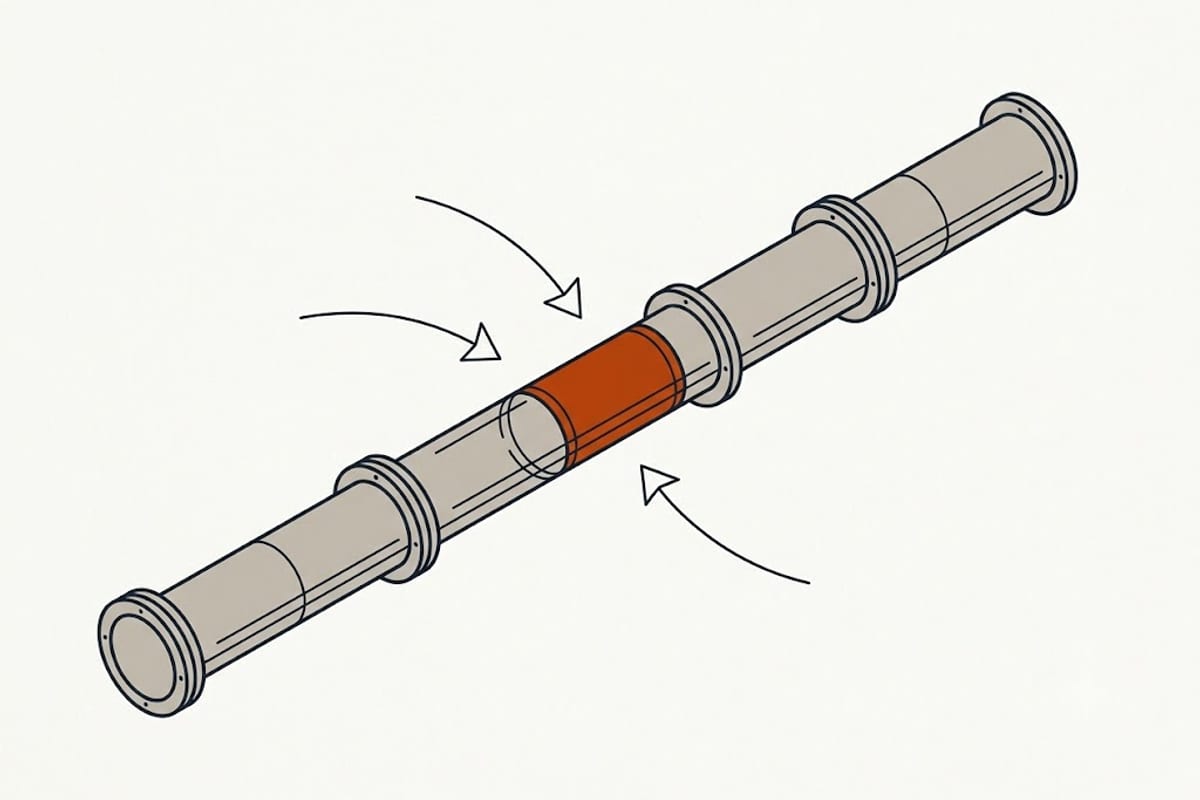
The arithmetic
A half-inch copper pipe holds roughly a gallon per 50 feet. Three-quarter inch holds about twice that.
A tap 60 feet from the heater on 3/4 inch pipe has around two and a half gallons standing in the line. At 1.5 gallons per minute that is well over a minute of waiting, and two and a half gallons down the drain each time.
Over a year, in a household with several distant fixtures, that is a substantial quantity of water and of the energy used to heat it.
Recirculation
A pump circulates hot water through the supply pipes so hot water is always close to the fixture.
A dedicated return line is the proper arrangement: a separate pipe from the furthest fixture back to the heater, forming a loop. It works well and it is practical only in new construction or a gut renovation.
A crossover valve at the furthest fixture uses the cold water line as the return, with a thermostatic valve that opens when the hot line cools. It retrofits into an existing house without new pipe, and it puts warm water into the cold line, which some households notice at the tap.
The cost of running it
A continuously running pump keeps the loop hot all day. That means the pipe is losing heat continuously and the heater is replacing it, which on an uninsulated loop is a significant energy penalty — sometimes larger than the standby loss of the tank itself.
Three ways to reduce it:
Insulate the loop. The single most effective measure, and it is often skipped.
A timer, running the pump only during the hours the household uses hot water.
A thermostat, running the pump only when the loop has cooled below a setpoint.
On-demand control — a button, a motion sensor, or an app — which runs the pump only when someone is about to use the tap. This is the most efficient arrangement by a wide margin, and it introduces a short wait rather than none.
With a tankless heater
Tankless units have their own version of the problem, since nothing is stored and the unit must fire before hot water starts moving.
Some units include a small internal buffer tank and a pump for exactly this. Where instant hot water matters, choosing a model with that feature is better than adding an external system afterwards.
The cheaper alternatives
Insulate the hot water pipes, particularly the first several feet leaving the heater and any long runs through unconditioned space. Cheap, and it reduces both the wait and the standing loss.
A small point-of-use heater at a remote fixture — a basin at the far end of the house, a bar sink — which removes the run entirely for that fixture.
Move the heater, in a renovation, closer to the fixtures that use it most.
What to do first
Measure the wait. Time it, and catch the water in a bucket to see the volume.
If it is a few seconds and half a litre, pipe insulation is the answer. If it is ninety seconds and two gallons at the master bathroom every morning, recirculation with on-demand control is worth the installation.
Pipe size matters more than people expect
A three-quarter inch run holds roughly twice the water of a half-inch run of the same length, and therefore takes roughly twice as long to clear.
Oversizing the branch lines to distant fixtures — a common instinct, on the grounds that bigger is better — directly lengthens the wait and increases the waste. Branch lines are sized for the fixtures they serve, and smaller is better for this reason.
That is one of the arguments for a manifold arrangement, where each fixture has its own small line from a central point.