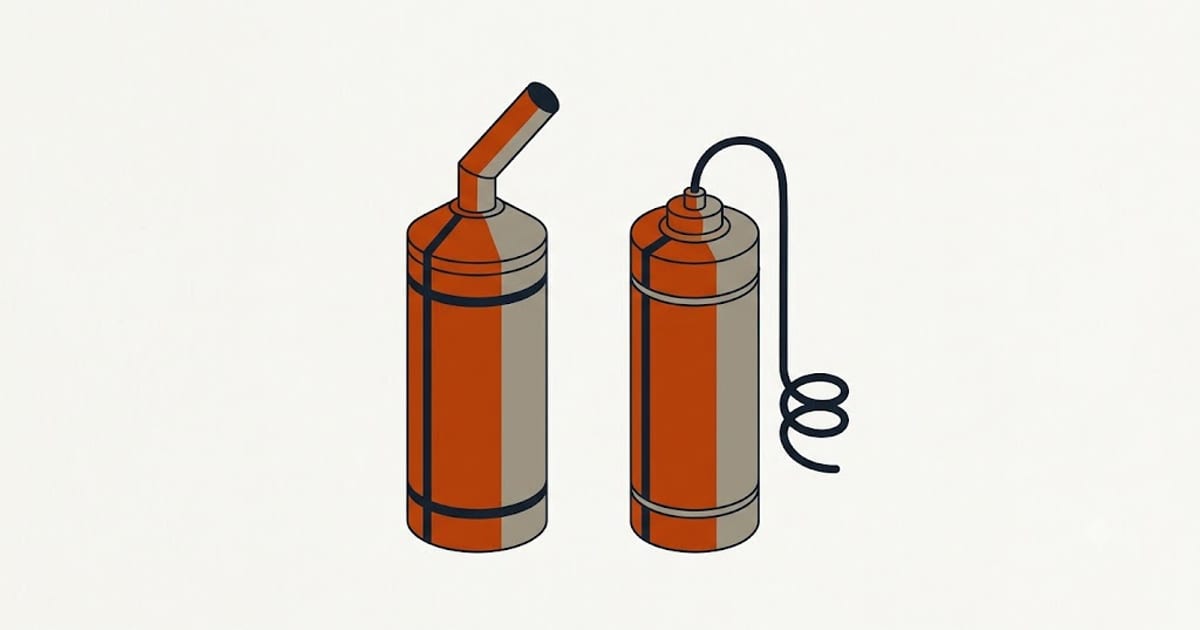
The choice is partly about running cost and largely about what the house can accommodate.
Recovery
Gas recovers about twice as fast as electric at typical residential ratings — roughly 40 gallons an hour against 20 through a 90°F rise.
That means a 40-gallon gas heater and a 50-gallon electric heater deliver comparable hot water over an hour, which is why the recommended tank sizes differ between the two.
Running cost
Convert both to dollars per delivered unit of heat:
$ per million BTU = (price per unit ÷ BTU per unit) × 1,000,000 ÷ efficiency
Gas at a typical utility rate is usually cheaper per BTU than electricity. Electric resistance is fixed at close to 100% efficiency, which sounds good and is the floor rather than the ceiling.
A heat pump water heater changes this decisively. At a UEF around 3.0 to 4.0 it delivers three to four times the hot water per unit of electricity, which frequently makes it cheaper to run than gas.
So the honest comparison is now three-way: gas, electric resistance, and heat pump electric — and electric resistance is generally the worst of the three on running cost.
What the house allows
Gas needs venting — a flue for an atmospheric unit, or a sealed vent for a power-vented or condensing one. It needs combustion air, and it needs a gas line.
Gas in a garage has ignition source elevation requirements in many jurisdictions, though most current units are flammable vapour ignition resistant.
Electric resistance needs a dedicated 240 V circuit, typically 30 amps, which most houses with electric water heating already have.
A heat pump unit needs air volume — commonly 700 to 1,000 cubic feet or ducting — plus a condensate drain, and it cools and dehumidifies the space it sits in.
Electric fits anywhere a tank fits, with no flue. That is why it appears in interior closets and upper floors where a gas unit would need venting.
The orphaned chimney problem
Where a gas water heater shares a chimney with a gas furnace, and the furnace is later replaced with a condensing model that vents in plastic, the water heater is left on an oversized cold flue.
That causes poor draft and condensation in the masonry. The remedies are relining the chimney, or moving the water heater to power-vented, direct-vent or electric.
It is a real cost and it belongs on a furnace quote, and it is the moment many households switch the water heater to electric.
Which to choose
Existing gas connection, adequate venting, cheap gas: gas is straightforward and recovers fast.
Existing electric, a suitable basement or garage, and incentives available: a heat pump unit is usually the best available choice on running cost, by a wide margin.
No gas service: heat pump if the space allows, resistance if it does not.
A tight closet with no ducting option and no gas: electric resistance, and size the tank generously because recovery is slow.
Switching from one to the other
Gas to electric needs a circuit and a panel position, and it abandons the flue — with the chimney consequence above if anything else shares it.
Electric to gas needs a gas line, venting and combustion air, which in an interior location is frequently impractical.
The direction most households now move is gas to heat pump electric, and the incentives are aligned with it.
Backup during an outage
An electric water heater stops entirely when the power fails.
An atmospherically vented gas heater with a standing pilot or a thermopile continues to work, which is a genuine advantage in an area with frequent outages. A power-vented or condensing gas heater does not, since its fan needs electricity.
That is a small consideration for most households and a decisive one for some, and it is worth naming before it is discovered.
Efficiency labels
Both types carry a UEF figure on the EnergyGuide label, calculated on a common basis so they can be compared directly.
Resistance electric sits around 0.90–0.95, gas storage around 0.60–0.70 for atmospheric and higher for condensing, and heat pump units at 3.0 and above. The scale is the same, which makes the gap the heat pump opens up immediately obvious.