Tank capacity is the number on the box and it is not the number that matters.
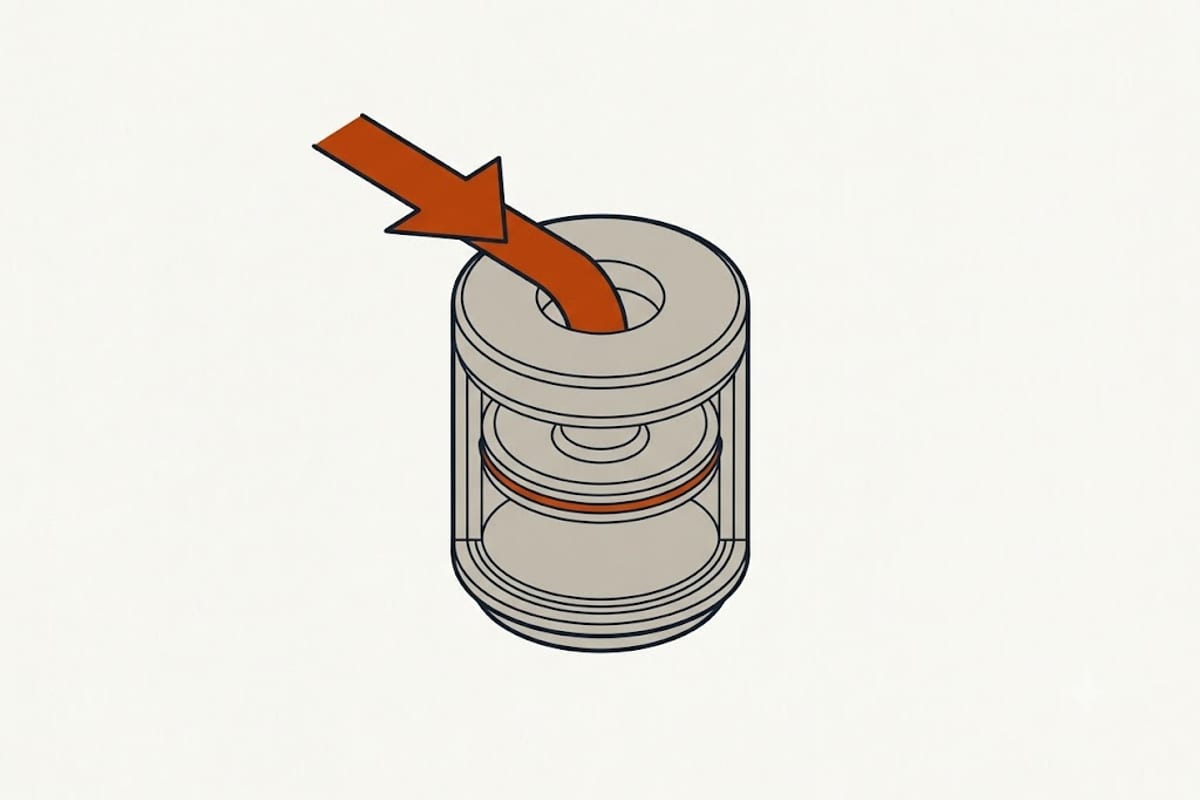
What FHR is
First hour rating is the gallons of hot water a heater can deliver in one hour, starting with a full tank of hot water.
It combines two things: the usable stored volume, which is somewhat less than the nominal tank size because incoming cold mixes at the bottom, and the recovery rate, which is how fast the burner or elements reheat.
It is on the EnergyGuide label of every storage water heater sold in the US, and it is the figure to size against.
Why it separates gas from electric
A 40-gallon gas heater and a 50-gallon electric heater have similar first hour ratings, because gas recovers far faster.
A typical 40,000 BTU gas burner raises roughly 40 gallons an hour through a 90°F rise.
A typical 4,500 watt electric element raises roughly 20 gallons an hour through the same rise — and electric heaters have two elements that do not both run at once in most residential wiring.
So gas gains most of a tank's worth back during the hour; electric gains half that.
Sizing to peak demand
The right target is the peak hour, not daily use.
Estimate what happens in the busiest hour of the household's day, in gallons of hot water:
| Use | Approx. hot water |
|---|---|
| Shower | 10–20 gal |
| Bath | 20 gal |
| Shaving at a basin | 2 gal |
| Hand washing | 1–2 gal |
| Dishwasher cycle | 6 gal |
| Clothes washer, warm | 7–15 gal |
| Kitchen sink use | 4 gal |
Add up what genuinely coincides — three showers and a dishwasher in the same hour, for instance — and choose a heater whose first hour rating meets or slightly exceeds it.
What people get wrong
Sizing by bedrooms or people alone. Two people who shower at the same time each morning have a higher peak than four who stagger.
Sizing on tank volume. A 50-gallon electric and a 50-gallon gas are different appliances by this measure.
Ignoring the incoming water temperature. A house in a cold climate has a much larger temperature rise to achieve, which lowers the recovery rate and therefore the first hour rating. This is why hot water runs out faster in winter.
Sizing for a house that no longer exists. Two teenagers who moved out are not a peak hour any more.
Tankless is rated differently
A tankless heater has no stored volume, so first hour rating does not apply. It is rated in gallons per minute at a stated temperature rise, and that is a different sizing exercise.
Where to find it
The yellow EnergyGuide label lists the first hour rating for storage heaters and the maximum GPM for tankless ones, alongside the UEF efficiency figure.
Manufacturers also publish it in the specification sheet. It is the one number worth comparing between two models of the same nominal size, and it frequently differs more than the gallon rating suggests.
Adjusting the peak rather than the heater
A household whose peak hour exceeds what any reasonable heater delivers has two options, and only one of them costs money.
Stagger the demand. Move the dishwasher and the clothes washer to a different hour, or run them overnight. Both are entirely deferrable and together they can be a third of a peak hour.
Reduce the flow. A low-flow shower head cuts a shower's hot water use substantially, and modern ones do it without the reputation the early ones earned.
Between them these frequently bring a peak back inside what the existing heater already delivers, which is worth trying before replacing anything.
The mixing valve trick
A tank held at a higher temperature stores more usable heat, and a thermostatic mixing valve at the outlet blends it down to a safe delivery temperature.
The effect is that a 50-gallon tank behaves like a larger one, because more of each stored gallon is usable. It is an inexpensive fitting and it is the standard answer where a household is one shower short.